Morning SEL routines establish a foundation of emotional safety and mutual respect by fostering consistent opportunities for students to share, reflect, and connect. In this guide, you’ll discover five research-backed practices, daily check-ins, gratitude sharing, mindful breathing, team-building games, and positive affirmations that promote trust and belonging. We’ll define each routine, explain its trust-building mechanism, provide step-by-step implementation advice, and show how The Mind Trek curriculum supports educators in adopting these strategies across middle and high school settings. By integrating these 5 quick morning SEL routines, you can cultivate a classroom community where students feel seen, heard, and supported.
What Are Morning SEL Routines and Why Do They Matter for Building Trust?
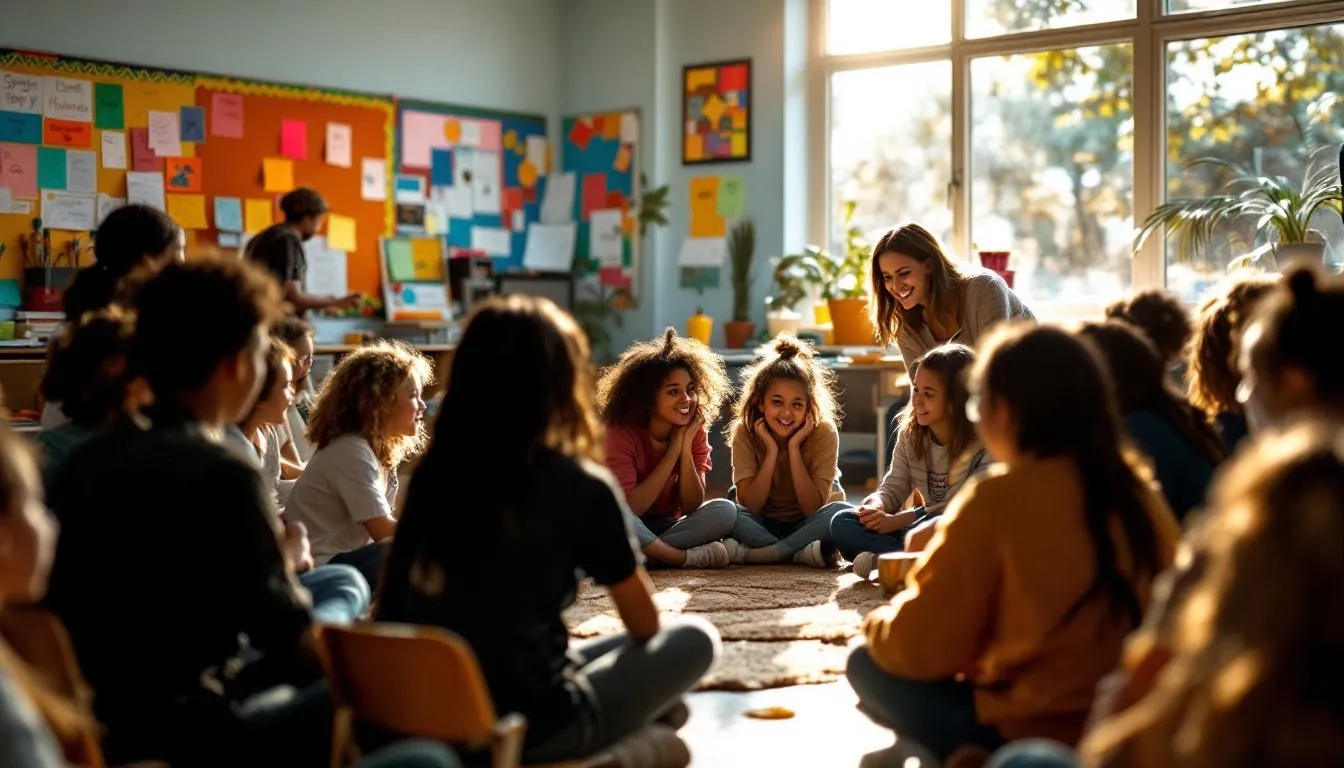
Morning SEL routines combine intentional social and emotional learning activities with the start-of-day schedule to create predictable spaces for students to reflect, connect, and co-regulate. These routines matter because they set a tone of empathy and reliability, inviting every learner into a shared practice of emotional awareness.
What Is Social Emotional Learning (SEL) in Morning Routines?
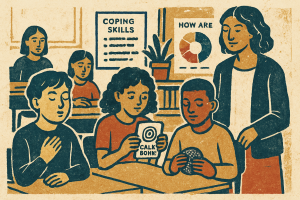
Social Emotional Learning in morning routines integrates structured practices such as check-ins, breathing exercises, or sharing circles that develop core competencies: self-awareness, self-management, social awareness, relationship skills, and responsible decision-making. By opening the day with these practices, educators embed emotional regulation and interpersonal skills into the classroom culture, ensuring that students enter academic tasks with a grounded sense of safety and connection.
The Importance of SEL in Education
Social and emotional learning (SEL) is a critical component of education, focusing on developing self-awareness, self-management, social awareness, relationship skills, and responsible decision-making. By integrating SEL into morning routines, educators can create a safe and connected learning environment.
This citation supports the article’s emphasis on the importance of SEL and its role in fostering trust and a positive classroom climate.
How Do Morning SEL Routines Foster Trust in the Classroom?
Morning SEL routines foster trust by modeling vulnerability and active listening. When students articulate feelings and observe peers doing the same, they learn that their voices matter. Trust emerges through repeated cycles of sharing and respectful response, establishing the classroom as a safe community where personal experiences and emotions are valued equally alongside academic content.
What Benefits Do Morning SEL Routines Bring to Classroom Community?
Morning SEL routines yield multiple benefits for classroom community:
- Enhanced Belonging – Regular check-ins signal that every student’s emotional state is recognized.
- Improved Engagement – Students who feel emotionally supported participate more actively.
- Reduced Anxiety – Mindful practices lower stress responses before academic tasks.
- Stronger Peer Relationships – Collaborative routines encourage empathy and mutual support.
- Positive Classroom Climate – A predictable SEL framework promotes consistency and respect.
These outcomes combine to form a cohesive classroom community rooted in trust, allowing academic instruction to proceed with a supportive social foundation.
What Are 5 Quick Morning SEL Routines That Effectively Build Trust?
Implement these five routines in under ten minutes to build trust, self-awareness, and a sense of belonging from the first bell.
How Does a Daily Emotional Check-In Build Trust and Self-Awareness?
A daily emotional check-in invites each student to name or rate their feeling on a brief scale, establishing self-awareness and peer understanding.
- Invite students to choose an emotion word or emoji.
- Record responses on a shared chart or digital board.
- Briefly acknowledge common themes before moving on.
This routine builds trust through consistent validation of student voices and enables teachers to tailor support based on collective emotional data.
How Can Gratitude Sharing Strengthen Classroom Relationships?
Gratitude sharing encourages students to identify something or someone they appreciate, shifting focus from deficits to assets.
- Ask each learner to name one thing they’re thankful for that morning.
- Rotate sharing order to ensure equitable participation.
- Celebrate diversity of responses.
By expressing gratitude, students practice perspective-taking and reinforce peer bonds. Gratitude sharing strengthens trust as classmates recognize the impact of kindness and acknowledgement on group cohesion.
What Role Does Mindful Breathing Play in Emotional Regulation and Trust?
Mindful breathing calms the nervous system and signals mutual care. A simple 60-second belly-breathing practice can align attention and foster group calm:
- Guide students to inhale for four counts, hold for two, exhale for six.
- Repeat three cycles.
- Encourage silent awareness of breath.
Mindful breathing builds trust by demonstrating an educator’s commitment to student well-being and by offering a shared, nonverbal experience of mutual support.
How Do Short Team-Building Activities Promote Peer Trust?
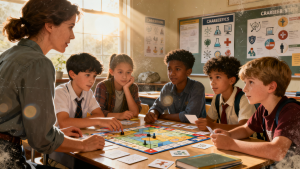
Short team-building activities, such as “Two-Line Acts” or “Trust Circles,” create quick wins in collaboration.
- Pair students for a 2-minute “Mirroring” exercise.
- Challenge small groups to solve a 3-piece puzzle in under five minutes.
- Debrief: ask “What helped you work together?”
These activities build trust through cooperative success and reflective discussion, revealing strengths and communication styles that foster interconnectedness.
How Can Positive Affirmations Encourage a Supportive Classroom Community?
Positive affirmations boost self-efficacy and cultivate a language of encouragement:
- Post a daily prompt: “I am capable of…”
- Invite volunteers to complete the sentence aloud.
- Display student affirmations on a classroom wall.
This routine promotes trust by reinforcing personal worth and by modeling how encouraging language uplifts both speaker and listener.
How Can Educators Adapt Morning SEL Routines for Middle and High School Students?
Adapting routines for adolescent learners requires attention to developmental needs, autonomy, and deeper reflection.
What Are Key Considerations for Middle School SEL Morning Activities?
Middle schoolers benefit from conversational check-ins, visual emotion charts, and brief journal prompts that respect emerging identity. Incorporate collaborative choices, allowing students to vote on which routine to use—to build ownership and trust.
How Should High School SEL Routines Differ to Foster Trust?
- Replace emoji charts with silent journaling prompts.
- Invite student leaders to guide breathing or gratitude sessions.
- Use small-group Socratic circles to discuss trust-related scenarios.
These adaptations build trust by honoring adolescents’ need for ownership and deeper connection.
How Does 'The Mind Trek' Curriculum Support Age-Specific SEL Implementation?
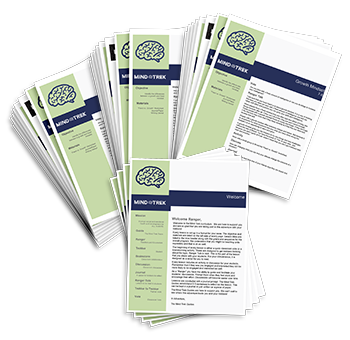
The Mind Trek curriculum offers grade-banded lesson plans, customizable check-in templates, and facilitator guides that align routines with CASEL competencies. By providing structured modules, digital resources, and measurable objectives, Mind Trek equips educators to implement age-appropriate morning SEL practices that consistently reinforce trust and classroom community.
The Mind Trek curriculum integrates morning routines into a broader SEL framework that aligns with research and educator feedback.
What Are Effective Trust-Building Activities Beyond Morning Routines?
Morning routines set the stage, but deeper trust emerges through varied activities that complement daily check-ins.
Which Interactive Trust-Building Games Engage Adolescents?
Games like “Trust Fall Variation,” “Blindfolded Drawing,” or “Human Knot” engage older students in physical and emotional support. Each activity is designed to require reliance on peer guidance and clear communication, reinforcing psychological safety.
How Can Facilitating Open Communication and Empathy Strengthen Trust?
Role-playing empathy scenarios and “Perspective Swap” discussions cultivate active listening and compassion. When students practice stepping into another’s shoes, they deepen mutual understanding and model vulnerability, directly bolstering trust.
What Role Do Collaborative Problem-Solving Activities Play in Trust Development?
Complex group challenges such as escape-room puzzles or community service projects link trust to real-world outcomes. Collaborative problem solving fosters reliance on diverse skills and shared responsibility, strengthening peer bonds through collective achievement.
What Are Common Challenges in Implementing Morning SEL Routines and How Can They Be Overcome?
Even the most promising routines face logistical and structural barriers; proactive strategies can address these challenges.
How Can Time Constraints Be Managed for Quick SEL Routines?
Integrate micro-routines of 1–2 minutes, rotate activities to maintain novelty, and align check-ins with administrative tasks like attendance. By embedding SEL into existing transitions, educators maximize impact without sacrificing instruction time.
Frequently Asked Questions
What are some effective ways to measure the success of morning SEL routines?
To measure the success of morning SEL routines, educators can track various key performance indicators (KPIs) such as student participation rates in check-ins, self-reported trust scores from surveys, and the frequency of positive peer interactions. Additionally, monitoring behavioral incidents can provide insights into the overall classroom climate. Regular assessments of these metrics can help educators identify trends and make necessary adjustments to enhance the effectiveness of their SEL practices.
How can educators ensure that all students feel included in SEL activities?
To ensure inclusivity in SEL activities, educators should create a safe and welcoming environment where every student feels valued. This can be achieved by using diverse methods of participation, such as allowing students to share through writing, art, or verbal expression. Additionally, rotating roles in group activities and encouraging peer support can help engage quieter students. Regularly soliciting feedback from students about their comfort levels and preferences can also guide more inclusive practices.
What challenges might educators face when implementing SEL routines, and how can they overcome them?
Educators may encounter challenges such as time constraints, lack of training, or resistance from students. To overcome these obstacles, they can integrate SEL routines into existing schedules, such as during morning announcements or transitions. Providing professional development opportunities focused on SEL can equip teachers with the necessary skills. Additionally, fostering a culture of openness and understanding can help address student resistance, making them more receptive to SEL practices.
How can SEL routines be adapted for students with diverse learning needs?
Adapting SEL routines for students with diverse learning needs involves tailoring activities to accommodate various abilities and learning styles. This can include using visual aids, providing alternative communication methods, and allowing for flexible participation options. Collaborating with special education staff can also ensure that routines are inclusive. Regularly assessing the effectiveness of these adaptations through student feedback can help refine practices to better meet individual needs.
What role do parents and guardians play in supporting SEL at home?
Parents and guardians play a crucial role in reinforcing SEL principles at home by modeling emotional awareness and communication. They can engage in discussions about feelings, encourage gratitude practices, and support their children in reflecting on daily experiences. Providing resources and information about SEL can help parents understand its importance and how to integrate similar practices into family routines, creating a consistent emotional learning environment both at school and home.
How can technology be utilized to enhance morning SEL routines?
Technology can enhance morning SEL routines by providing interactive platforms for check-ins, gratitude sharing, and mindfulness exercises. Apps and online tools can facilitate anonymous sharing of feelings, allowing students to express themselves comfortably. Additionally, educators can use digital resources for guided breathing exercises or team-building games. Incorporating technology not only engages students but also allows for creative and varied approaches to SEL that can cater to different learning preferences.
What are some long-term benefits of consistently implementing SEL routines in the classroom?
Consistently implementing SEL routines in the classroom can lead to numerous long-term benefits, including improved academic performance, enhanced emotional regulation, and stronger peer relationships. Students develop critical social skills, such as empathy and collaboration, which are essential for success in both academic and personal contexts. Over time, a positive classroom climate fosters a sense of belonging and trust, contributing to lower levels of anxiety and behavioral issues, ultimately creating a more conducive learning environment.
Conclusion
Integrating morning SEL routines fosters a classroom environment where trust, belonging, and emotional safety thrive. By implementing practices like daily check-ins and gratitude sharing, educators can significantly enhance student engagement and peer relationships. Embrace the transformative potential of The Mind Trek curriculum to support your SEL journey. Discover how these strategies can elevate your classroom community today.