Emotional regulation in the classroom becomes especially important in grades 5–8 as students navigate increasing academic demands, social pressures, and emotional fatigue. By February, many teachers notice heightened reactions, peer conflict, and emotional shutdowns, even from students who typically manage well. Understanding how emotional regulation develops and how to support it effectively can help teachers create calmer, more productive learning environments during this challenging time of year.
This isn’t a failure of classroom management. It’s a predictable point in the school year where emotional regulation skills are under strain.
Emotional regulation is a core part of social-emotional learning, and it’s closely connected to executive functioning. When students feel overwhelmed, their ability to focus, problem-solve, and persist drops quickly. Understanding this connection helps teachers respond with support rather than frustration.
What Emotional Regulation Really Looks Like in the Classroom
Emotional regulation is not about suppressing feelings or expecting constant calm. It’s the ability to:
Recognize emotions
Pause before reacting
Use strategies to manage stress
Recover after setbacks
In grades 5–8, students are still developing these skills. Add academic pressure, social dynamics, and fatigue, and regulation becomes even harder.
Common signs students are struggling with emotional regulation include:
Overreacting to small frustrations
Shutting down or refusing to engage
Increased peer conflict
Difficulty recovering after mistakes
Emotional outbursts during transitions or unstructured time
These behaviors are often signals, not choices.
Why February Is Especially Hard
Several factors converge this time of year:
Long stretches without extended breaks
Increased academic expectations
Social fatigue and peer tension
Seasonal stress and low energy
When emotional regulation resources are depleted, students rely more heavily on adult support and structured environments.
This is where intentional SEL support matters most.
Practical Ways Teachers Can Support Emotional Regulation
1. Normalize Big Feelings
Explicitly acknowledge that learning can be frustrating and emotions can run high. When students feel understood, they’re more likely to use strategies.
2. Teach Regulation Skills Before They’re Needed
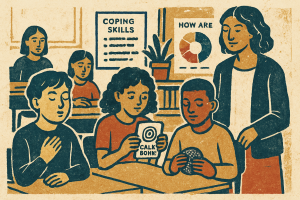
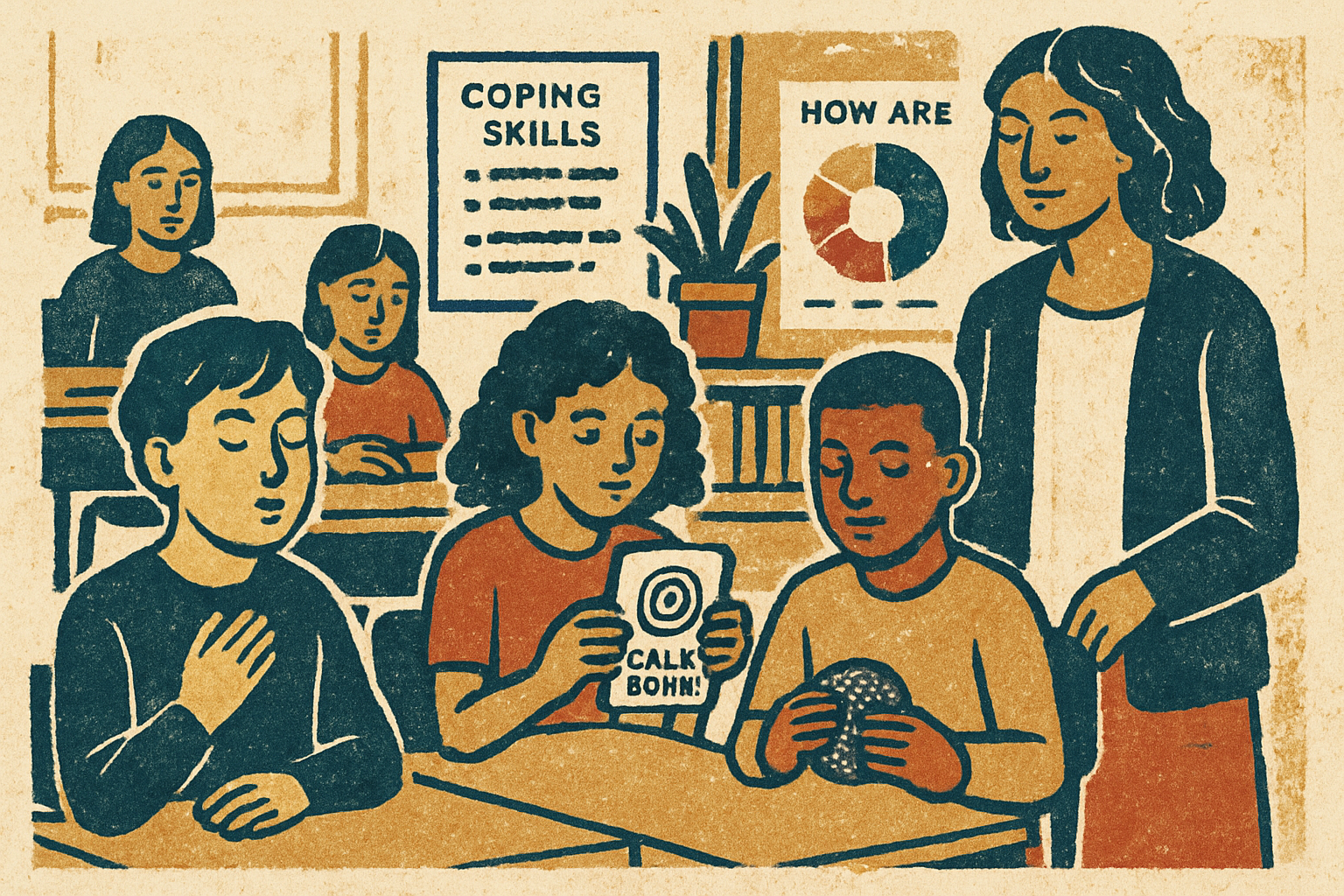
Skills like deep breathing, grounding, and self-talk work best when practiced during calm moments—not in the middle of a meltdown.
3. Use Visual Supports
Visual reminders of coping strategies help students access tools independently. When emotions run high, verbal reminders often aren’t enough.
4. Create Predictable Calm Spaces
Designated calm-down areas or regulation tools allow students to reset without disrupting learning or feeling punished.
5. Model Regulation
Teachers modeling calm responses, flexible thinking, and recovery after mistakes gives students a blueprint for their own behavior.
The Connection Between SEL and Executive Functioning
Emotional regulation supports executive functioning skills like:
Focus and attention
Cognitive flexibility
Task persistence
Impulse control
When students feel emotionally safe and regulated, they are better able to engage academically.
SEL is not an “extra.” It’s a foundation.
Classroom Resources to Support Emotional Regulation
If you’re looking for ready-to-use supports that fit naturally into your classroom:
Calm Corner Kit
Provides visual tools and strategies students can use to regulate emotions and return to learning.Upstander and Bullying Prevention Games
Helps students practice empathy, assertive communication, and peer problem-solving in a structured way.
These tools are designed to complement your classroom routines, not add more to your plate.
Supporting emotional regulation in grades 5–8 is about meeting students where they are developmentally, especially during high-stress times of year. When teachers prioritize emotional skills alongside academics, classrooms become more focused, supportive, and resilient.