Career exploration in the classroom is a powerful way to reengage grades 5–8 students when motivation starts to dip. By March, many teachers hear questions like, “Why do we have to learn this?” Connecting learning to real-world careers helps students see relevance, build curiosity, and reengage academically without adding extra curriculum or prep time.
By March, motivation often dips. Students ask, “Why do we have to learn this?” Engagement drops, and lessons that once worked feel harder to sustain.
This isn’t a sign that students don’t care. It’s a sign they’re craving relevance.
Career exploration provides a powerful bridge between learning today and life beyond the classroom, especially for upper elementary and middle school students who are beginning to think about identity, strengths, and the future.
Why Career Exploration Works at This Age
Career exploration is not about choosing a job. It’s about:
Making learning feel purposeful
Connecting skills to real-world use
Increasing engagement through curiosity
For grades 5–8, career-focused activities support:
Motivation and persistence
Flexible thinking
Goal-setting
Self-awareness
These are executive functioning skills in action.
Lorem ipsum dolor sit amet, consectetur adipiscing elit. Ut elit tellus, luctus nec ullamcorper mattis, pulvinar dapibus leo.
Career Exploration as an Engagement Strategy
When learning connects to real-world roles, students:
Ask better questions
Participate more actively
Take academic risks
See value beyond grades
Career exploration reframes learning from “work” to “preparation.”
Easy Ways to Integrate Career Exploration
Career exploration doesn’t need a separate unit. It can fit naturally into existing structures.
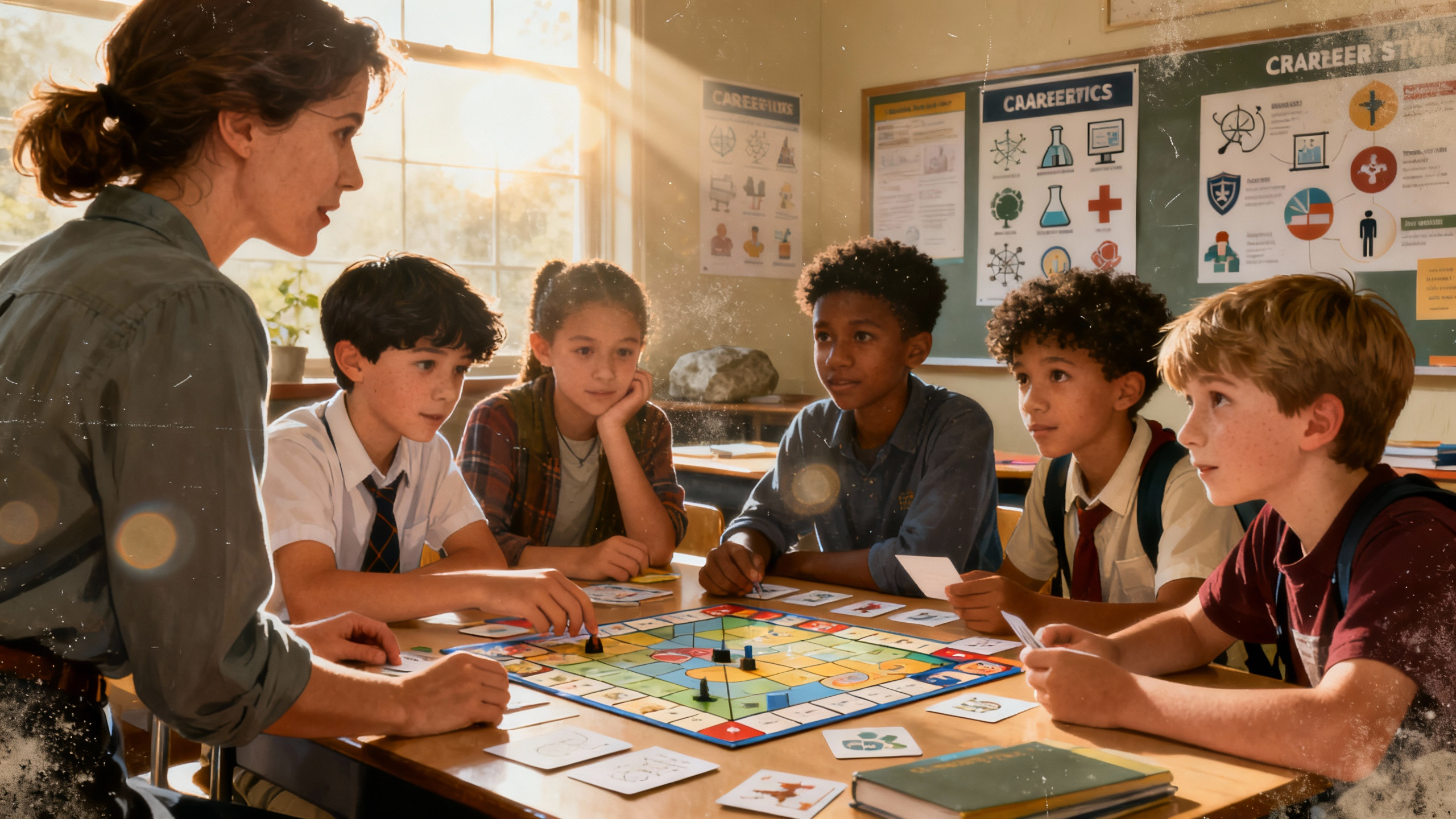
1. Use Games to Spark Interest
Trivia, BINGO, and team-based games reduce pressure while increasing participation.
2. Highlight Transferable Skills
Help students see how skills like organization, teamwork, and problem-solving apply across careers.
3. Offer Choice and Curiosity
Let students explore different paths and perspectives without pressure to decide.
4. Connect Careers to Academic Content
Math, reading, science, and SEL skills all exist in the real world—students just need help seeing the connection.
Supporting Executive Function Through Career Exploration
Career exploration strengthens executive functioning by:
Encouraging goal-setting
Practicing planning and follow-through
Building persistence
Supporting flexible thinking
When students understand why skills matter, they’re more willing to practice them.
Classroom Resources for Career Exploration
If you’re looking for engaging, low-prep ways to integrate career exploration:
Career Cluster BINGOs
Interactive games that introduce careers while building vocabulary and engagement.Classroom Feud and Jeopardy Games
Team-based activities that promote collaboration, recall, and discussion.Tool Time Trivia & Life-Size Monopoly
Hands-on options that bring careers to life and work well for advisory or enrichment.
These resources help students explore future possibilities while strengthening executive functioning skills.
Closing Thought
Career exploration answers one of the most powerful questions students ask: Why does this matter? When learning feels relevant, motivation increases, and so does engagement.
Helping students see themselves in the future makes learning in the present more meaningful.